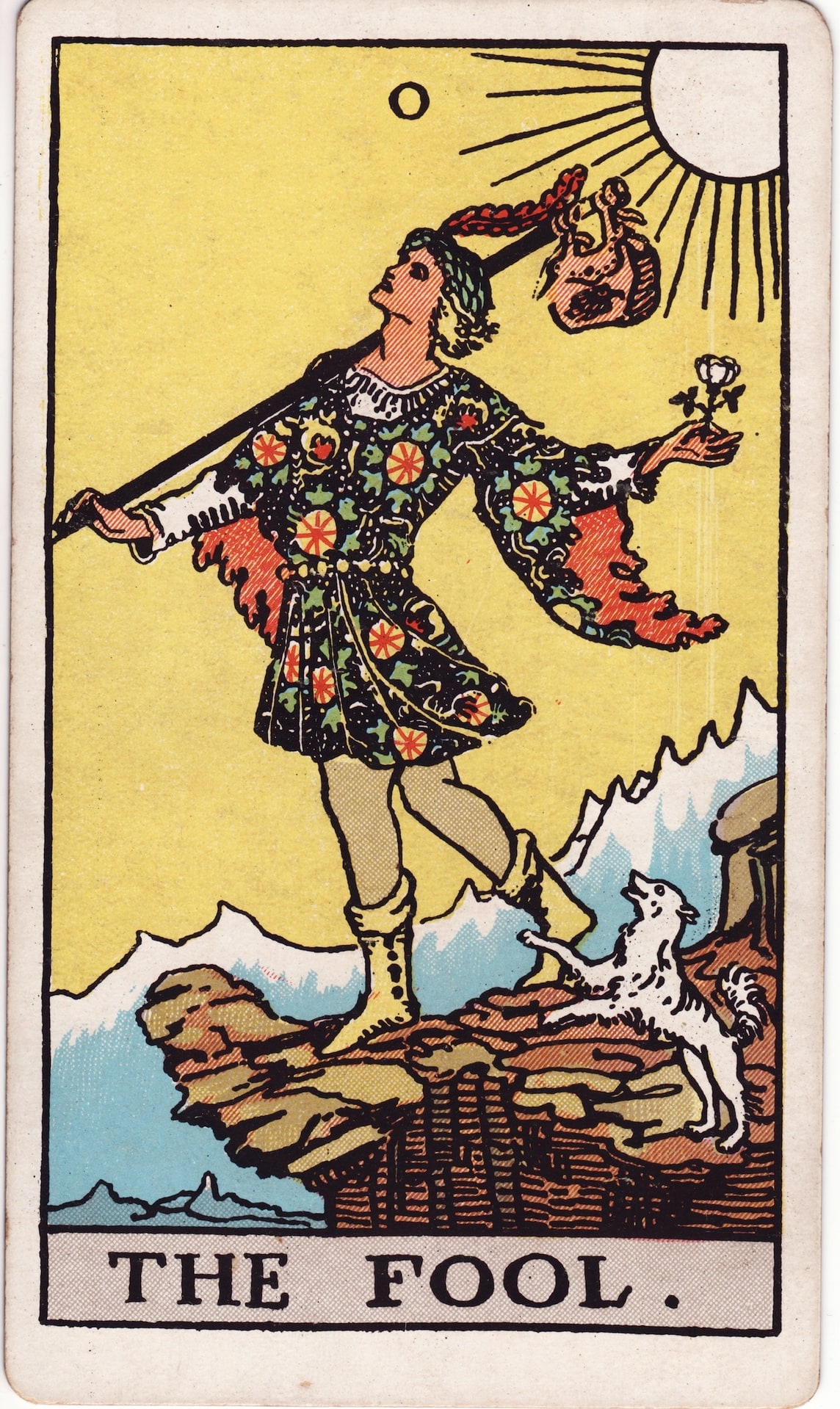
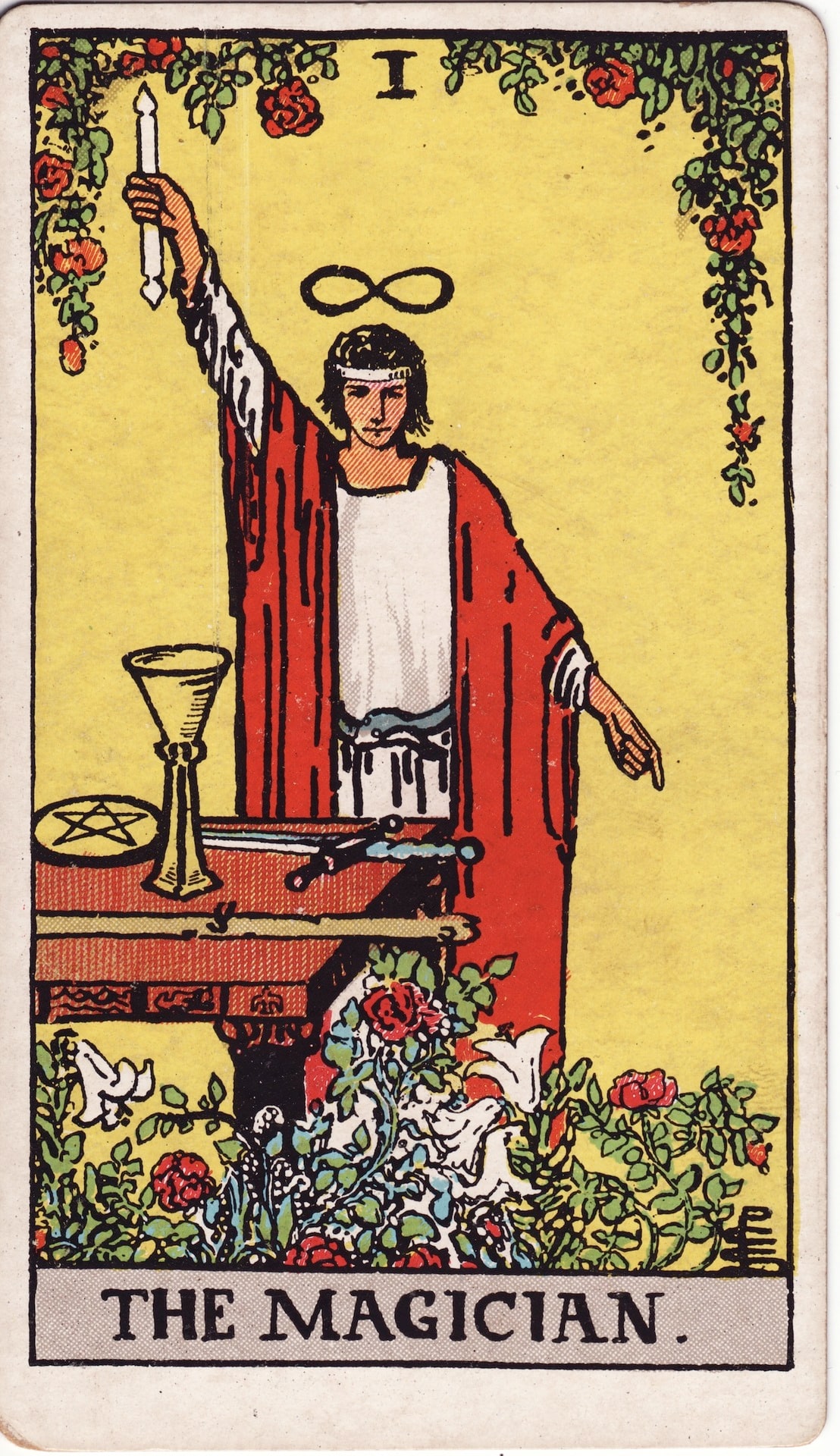
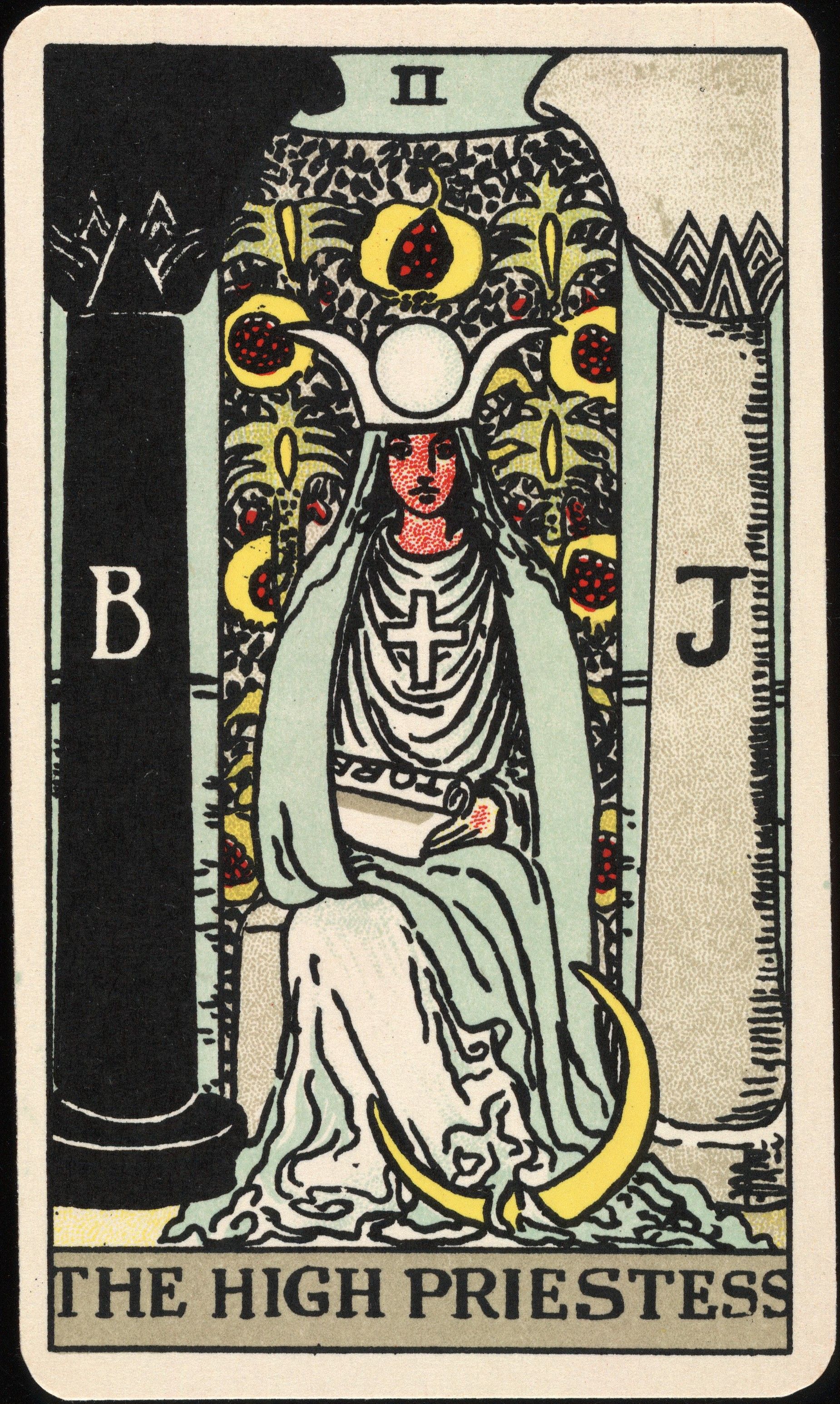
The Waite–Smith Deck
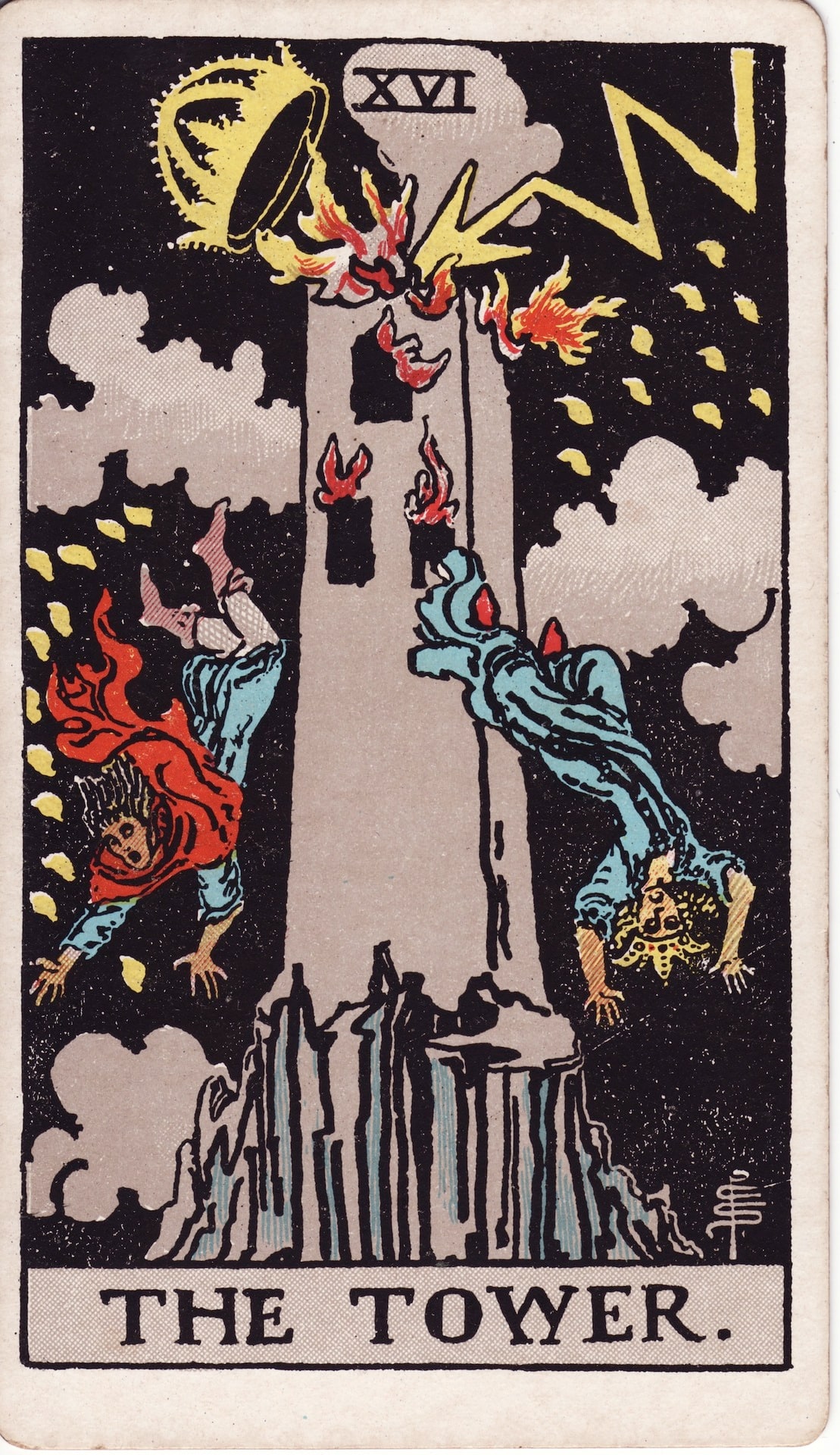
The Tower
The built thing struck down in an instant.
- Work
- from the 1909 Waite–Smith deck
- Plate
- Major Arcana · Key 16
- Maker
- Pamela Colman Smith, for A. E. Waite
- Date
- 1909
- Source
- Published London, 1909 · scan: Wikimedia Commons
Format
The full-resolution scan, color-managed to the source plate — yours to print, study, and explore.
Size
$29.00
The story
Lightning strikes a high tower, its crown blown off, two figures falling headlong past flames into the dark. Pamela Colman Smith drew it in 1909 as the card of sudden overturning — the built thing struck down in an instant. It is the deck's most violent image, and she staged it with theatrical force. Smith completed all seventy-eight for a flat fee in a matter of months, and the tower of her own credit stood unlit for the better part of a century. Look for the falling crown, the twenty-two flames of the yods, and the 'PCS' monogram set into the lower corner.
See it on your wall
The plate, in your home
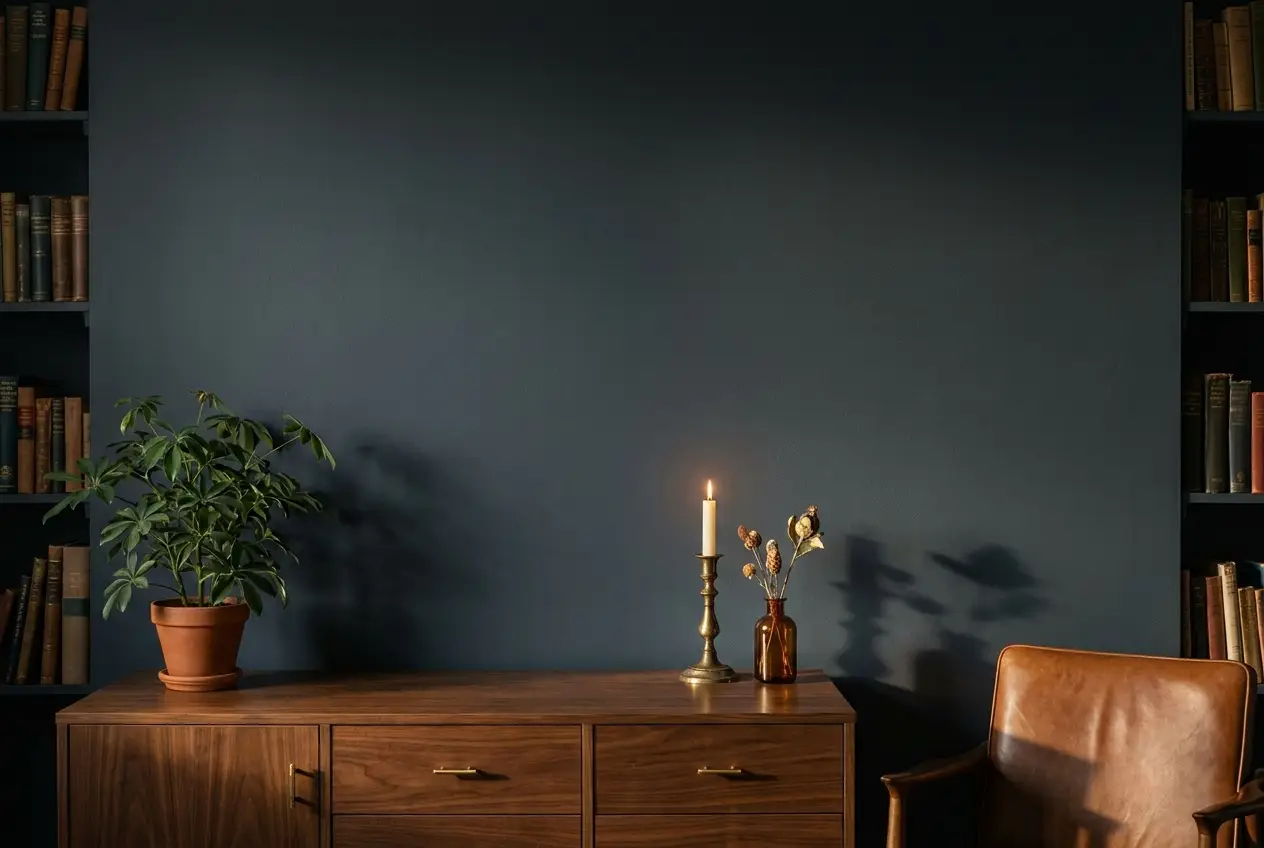
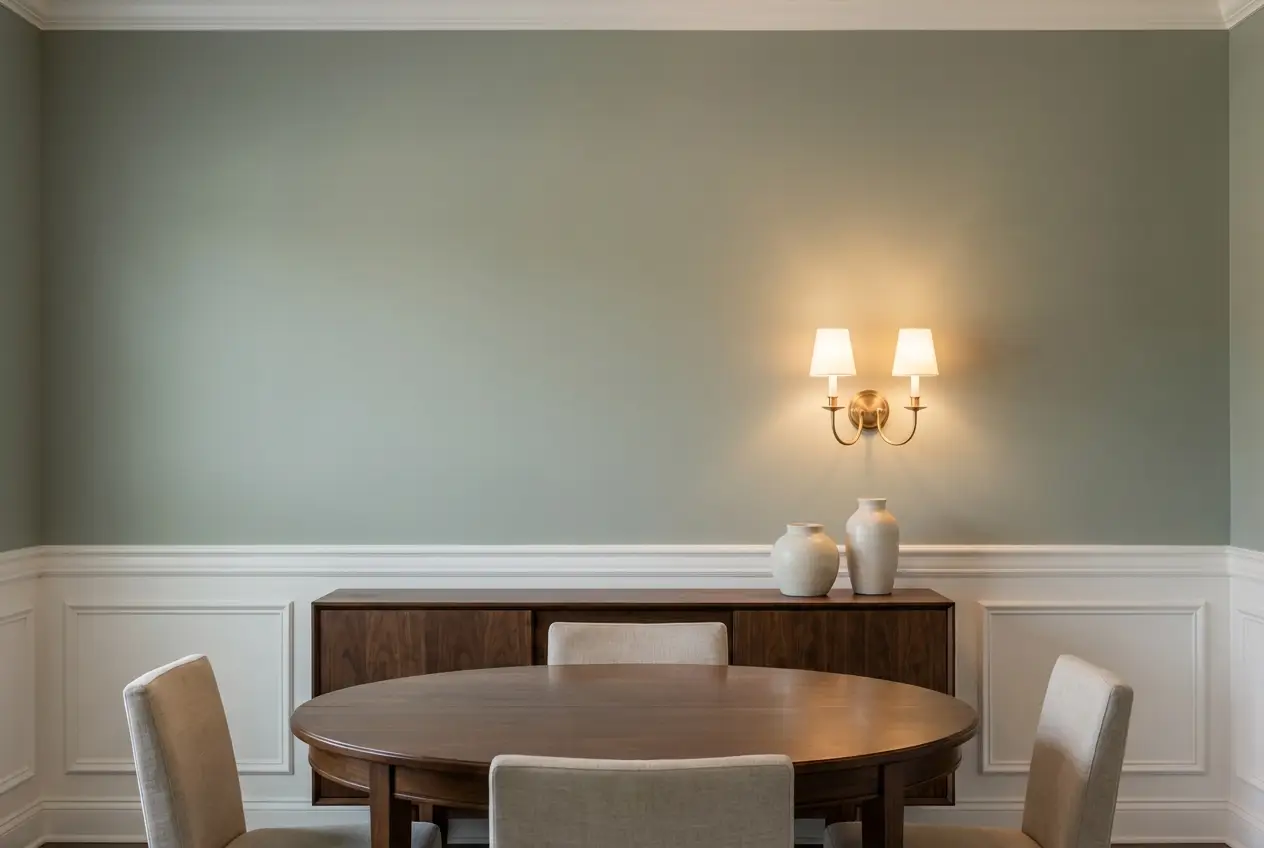
The Tower printed large and framed, hung in rooms like yours. Every edition ships ready to become the piece the room is built around.


About this reproduction
- A faithful reproduction of a public-domain plate — from the 1909 Waite–Smith deck (1909), held by Published London, 1909 · scan: Wikimedia Commons. The work was published before 1931 and is centuries out of copyright.
- Printed to order on 200gsm EMA matte art paper; framed pieces sit behind acrylic, no mat.
- Color-managed to the source scan; we correct nothing and invent nothing.
- Ships in 5–10 business days, rolled in a heavy-wall tube (framed pieces ship flat-packed).
- If it arrives less than perfect, we reprint or refund — your choice.
Why our plates cost more than a poster: we print from the highest-resolution scans available, at sizes where the engraving itself becomes visible — the emblem line, the letterpress bite, the registration of colour — on stock made to outlive its owner.
From the same hand